
- Home
- Secondary Structural…
- Tie Rods & Angl…
Tie Rods & Angle Bracing
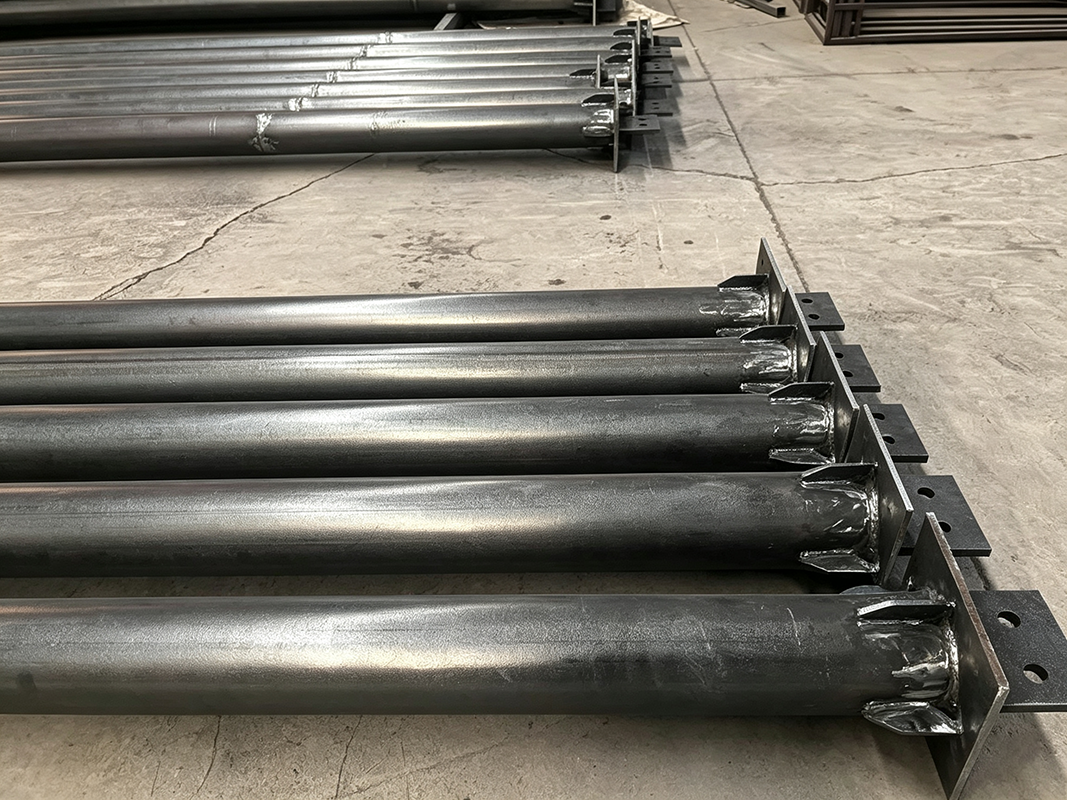
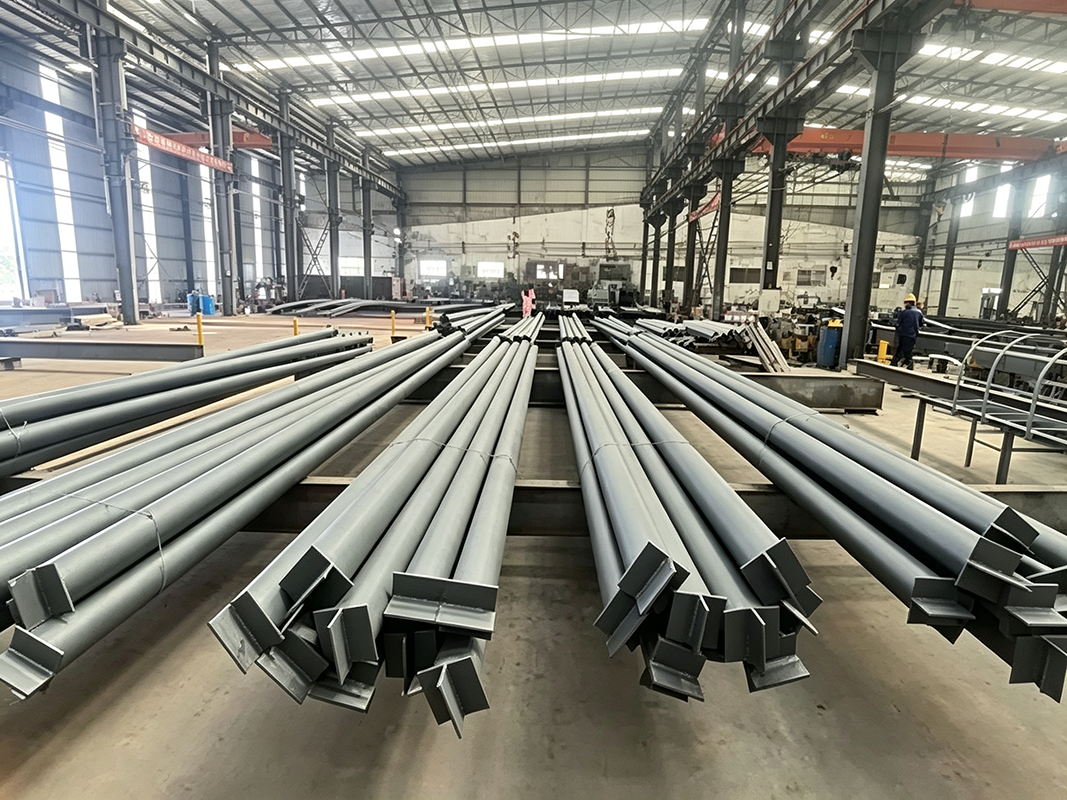
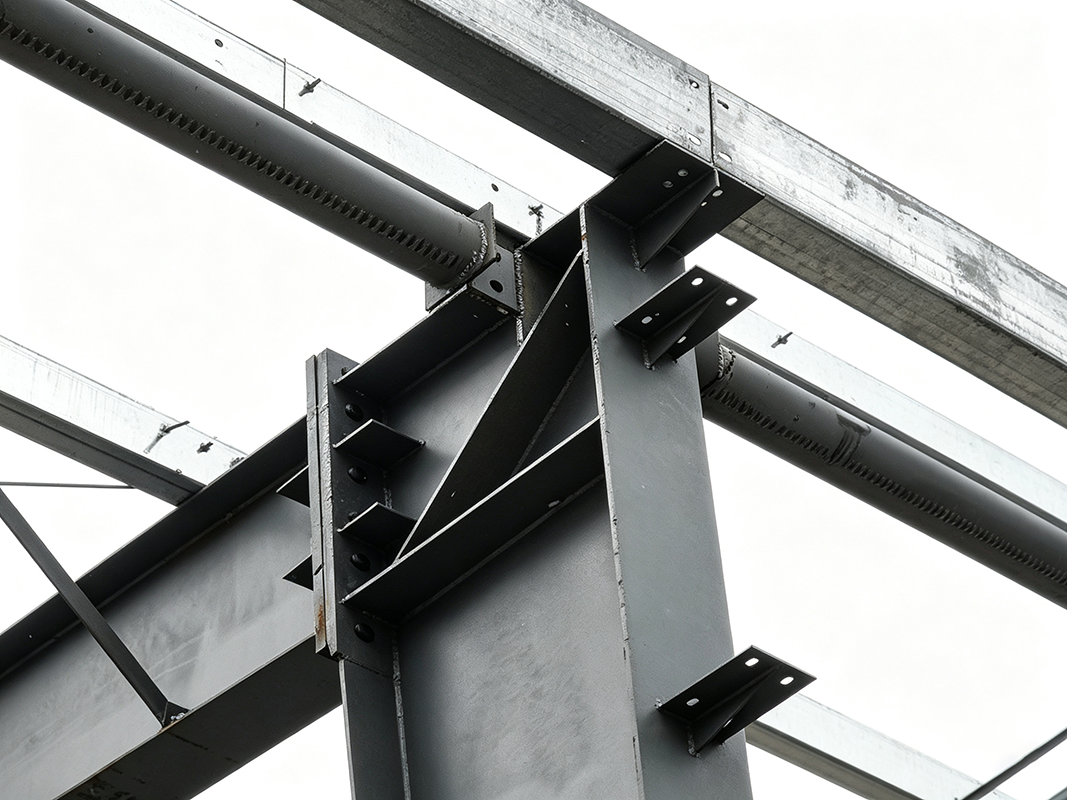
Tie rods and angle bracing (knee/flange bracing) are essential secondary stability components engineered for pre-engineered steel buildings (PEB) and industrial steel frameworks. Tie rods maintain purlin and girt alignment while transmitting longitudinal wind/seismic loads. Angle bracing connects the inner compression flange of primary rafters and columns directly to purlins or girts, dramatically reducing unbraced lengths and preventing lateral-torsional buckling (LTB). Factory pre-drilled/threaded for rapid field bolting with hot-dip galvanized or painted anti-corrosion finishes.
Categories: Secondary Structural Systems
Tie Rods & Angle Bracing
Tie rods and angle bracing (flange/knee bracing) are critical secondary stability support systems in pre-engineered steel buildings (PEB) and heavy structural framing. While tie rods maintain precise spacing and alignment of purlins/girts, angle bracing secures the inner compression flanges of main rafters and columns to secondary members, effectively preventing lateral-torsional buckling (LTB) and boosting overall frame rigidity.
Tie Rods & Sag RodsFabricated from solid round bar or steel pipe to keep purlins/girts parallel, prevent cross-sectional twisting, and transfer wind loads back to brace bays.
Angle Bracing (Flange Bracing)Structural angle steel members connecting primary frame compression flanges directly to roof purlins or wall girts for lateral stability.
Buckling & LTB PreventionSignificantly reduces the out-of-plane unbraced length ($L_b$) of primary structural members, enabling thinner steel profiles to carry larger loads safely.
Pre-Engineered Fast AssemblyFactory-cut, threaded, or pre-punched bolt holes ensure 100% bolt-on field assembly without any on-site cutting or welding required.
Available Steel Grades & Finish Options
Q355B
Solid Round Steel
L-Angle Section
Hot-Dip Galvanized (HDG)
Electro-Galvanized
Alkyd / Epoxy Primer
- Raw Material Options: High-tensile solid round steel bars (or steel tubing) for tie/sag rods, and standard structural equal angles (L-profiles) for angle bracing.
- Anti-Corrosion Surface Treatment: Hot-dip galvanizing with zinc coating weights up to 275 g/m² for maximum weathering resistance, or heavy-duty shop-applied anti-corrosion primer.
- Dimensional Ranges: Tie rod diameters from 12mm to 30mm with metric threaded ends; Angle braces typically utilize L40x4, L50x4, L50x5, to L75x6 angle profiles.
- Pre-Engineered Steel Buildings (PEB): Secondary stability bracing systems for primary rigid frames, roof purlins, and wall girts.
- Industrial Warehouses & Workshops: Prevents structural buckling under heavy overhead crane vibrations and dynamic wind suction loads.
- Large-Span Roof Framing Systems: Maintains strict alignment and rigidity across wide purlin spans during roof panel installation.
- Wall Cladding & Girt Systems: Restrains wall girts against sag under heavy insulated sandwich panel or single-skin sheet loads.
- Maximum Structural Economy: Substantially increases the load-bearing efficiency of primary H-beams and columns at a minimal additional steel weight cost.
- Flawless Purlin Alignment: Threaded tie rods allow easy field adjustment to pull purlins into perfect straightness prior to metal sheet fixing.
- Maintenance-Free Weathering: Galvanized surfaces protect fasteners and thin bracing sections from rust, ensuring long-term structural integrity.
- Uniform Thread Tensioning: Adjust nuts on threaded sag rods evenly during installation to prevent loose sagging or unequal stress distribution.
- Designed Bracing Angles: Ensure angle braces are fitted precisely at designed inclination angles (typically 45°) to guarantee direct load paths to purlins.
- Protect Threaded Ends: Use protective caps or careful rigging during transport to prevent thread damage or zinc layer flaking before field assembly.