
- Home
- Secondary Structural…
- Spatial Pipe Trusses
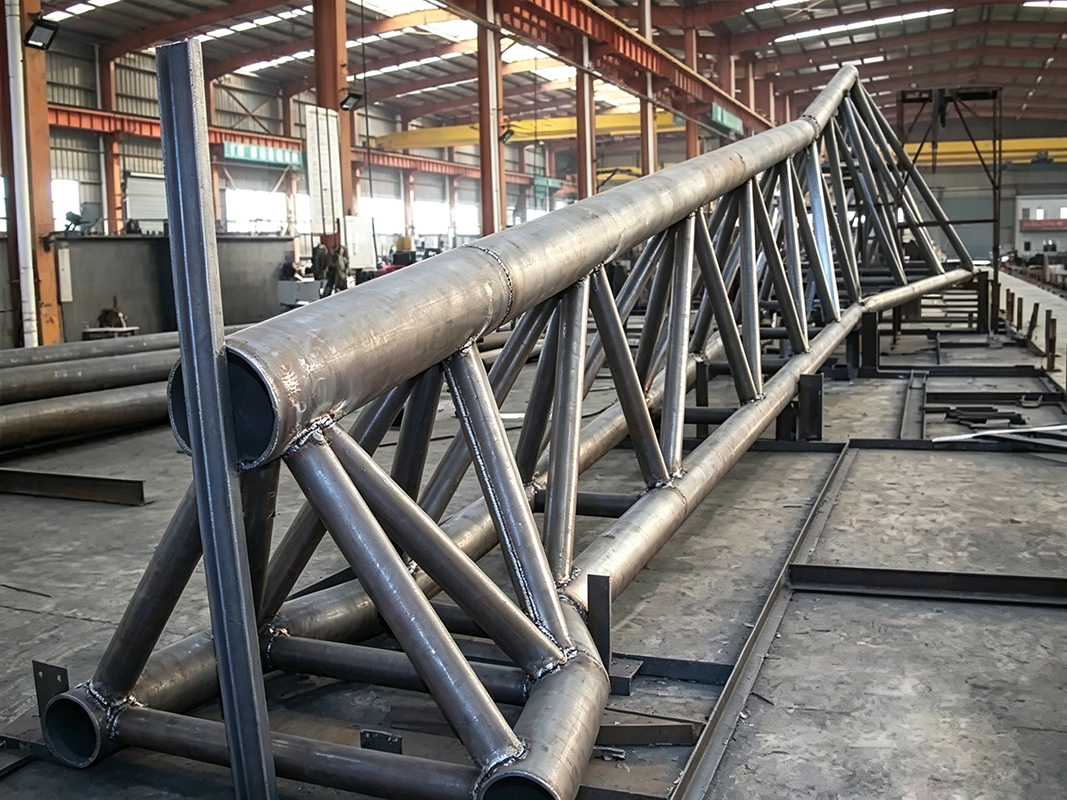
Spatial Pipe Trusses
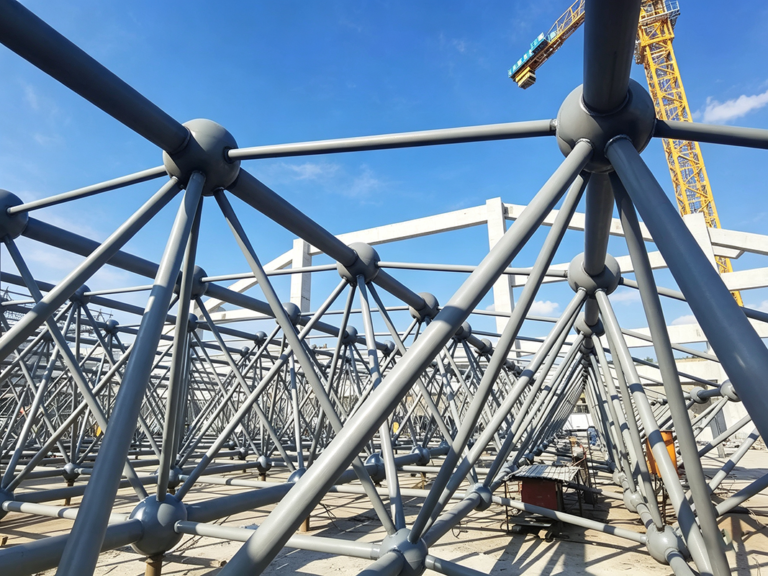
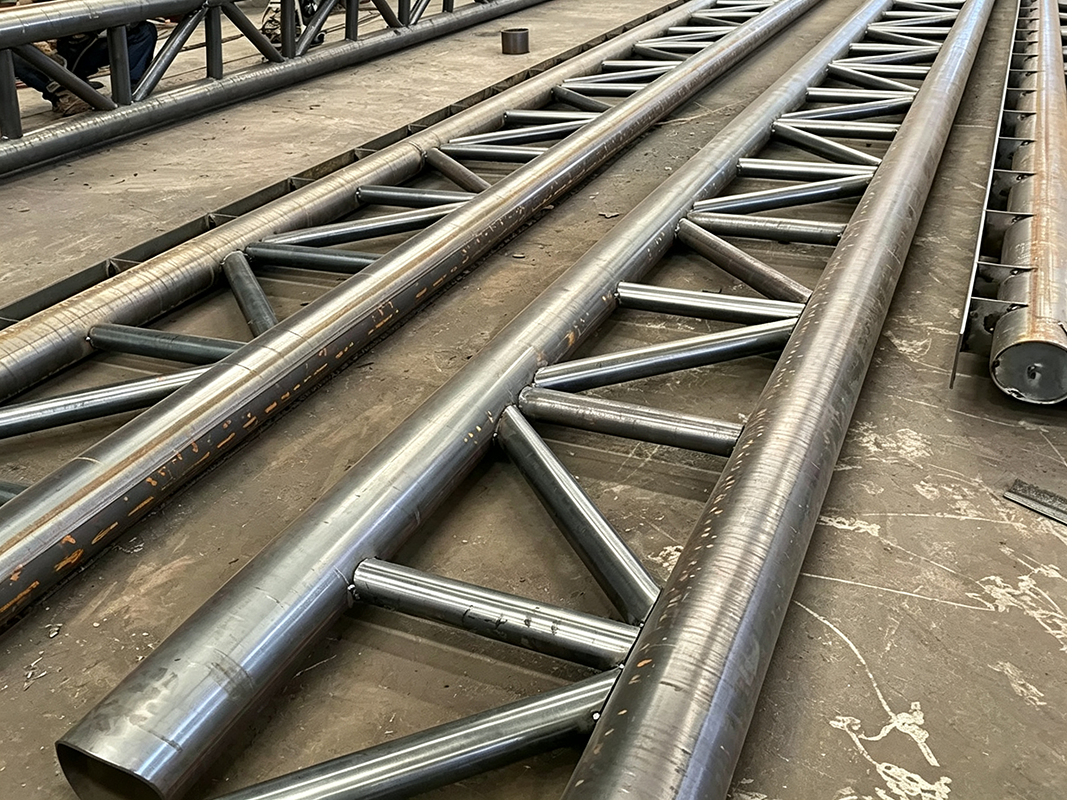
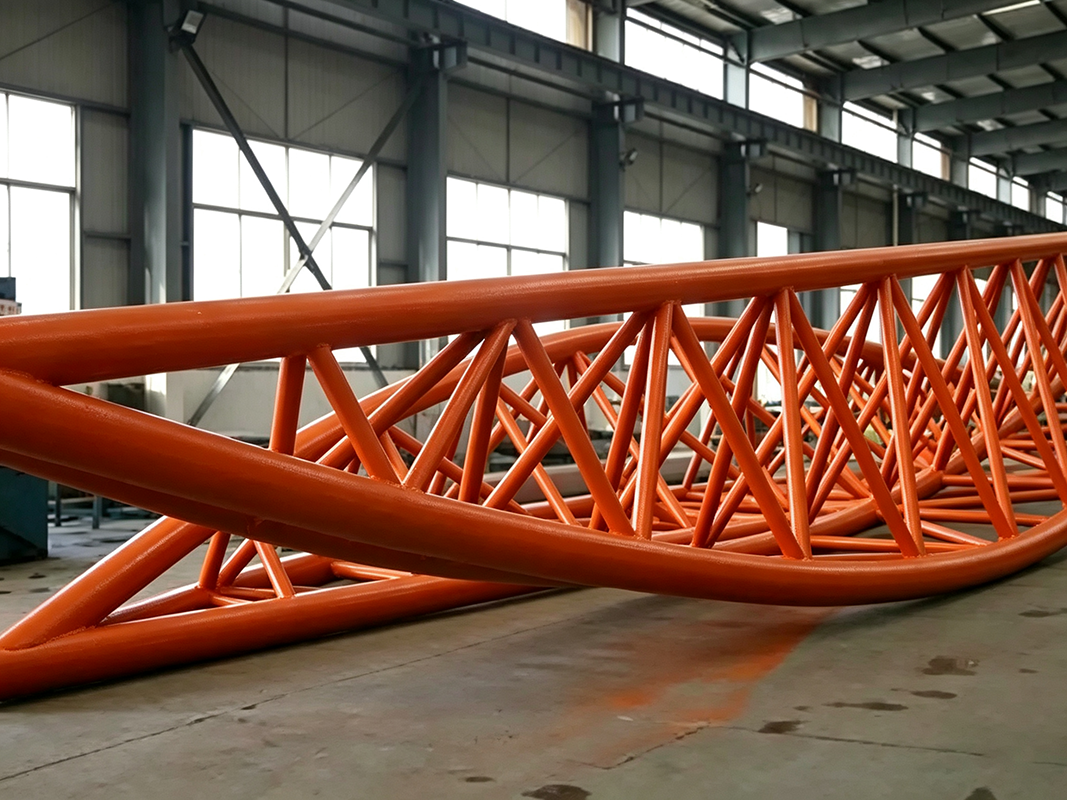
Spatial pipe trusses are 3D structural frameworks fabricated by welding intersecting circular or rectangular steel hollow sections (CHS/RHS). Featuring high spatial rigidity, lightweight design, clear force distribution, and striking architectural aesthetics. Direct intersecting welded joints eliminate heavy gusset plates, optimizing structural strength and wind resistance. Widely used for large-span roofs in stadiums, airport terminals, railway stations, exhibition centers, and heavy industrial plants.
Categories: Secondary Structural Systems
Spatial Pipe Trusses
Spatial pipe trusses are advanced three-dimensional structural systems composed of circular steel tubes (CHS) or rectangular hollow sections (RHS/SHS) joined via direct intersecting line welding. Known for their high spatial rigidity, superior strength-to-weight ratio, and clean geometric aesthetics, they represent the ideal choice for large-span roofs and landmark architectural structures.
Q355B / Q355C / Q355D
Q420B
CHS (Circular Hollow Section)
RHS / SHS
HDG / C5-M Coating
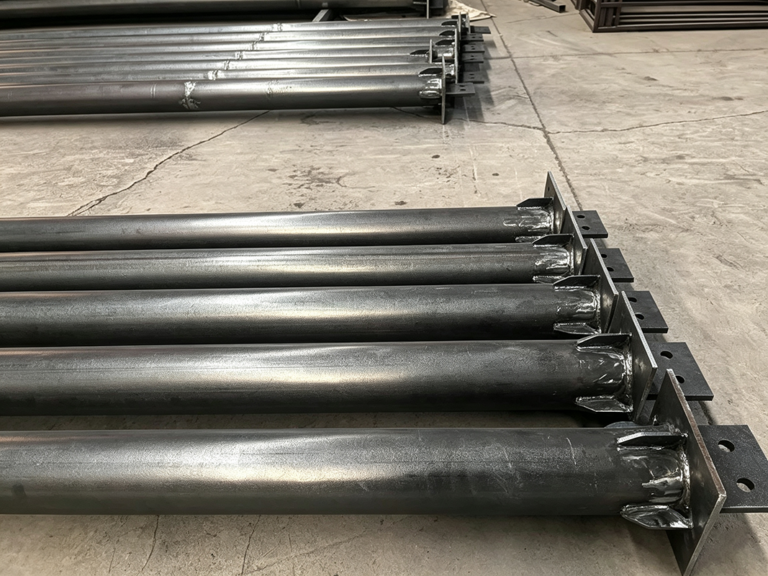
- High-Quality Steel Pipe Selection: Fabricated from seamless structural steel pipes or high-frequency welded (ERW/LSAW) structural hollow sections with high impact toughness.
- CNC Multi-Axis Intersecting Cutting: Utilizing advanced 5-axis/6-axis CNC laser or plasma pipe cutters to ensure millimeter-accurate beveling and intersecting joint fit-up.
- Full-Penetration Ultrasonic Welding: Assembled using shielded metal arc or gas metal arc welding with 100% Ultrasonic Testing (UT) and Magnetic Particle Testing (MT) to guarantee weld integrity.
- Sports Stadiums & Arenas: Large-cantilever roof structures providing unobstructed views and high resistance to dynamic crowd and wind forces.
- Transportation Hubs: Airport terminal concourses, high-speed railway station halls, and bus transit centers.
- Exhibition & Convention Centers: Ultra-large span column-free hall roofs accommodating flexible commercial layouts.
- Heavy Industrial Facilities: Pipe bridges, coal storage sheds, conveyor galleries, and high-clearance industrial workshops.
- Column-Free Ultra-Long Spans: Easily achieves spans ranging from 30 meters to over 120 meters while maintaining low structural deflection.
- High Seismic & Wind Endurance: Symmetrical hollow cross-sections evenly absorb multi-directional seismic waves and extreme typhoon winds.
- Corrosion Resistance & Longevity: Smooth external surfaces prevent dirt and moisture accumulation, simplifying anti-corrosion maintenance.
- Trial Assembly in Factory: Perform 3D digital simulation or physical pre-assembly in the workshop to verify joint geometry and dimensional tolerances.
- Segmented Erection Strategies: Choose optimal site erection methods such as ground sub-assembly with heavy crane lifting, hydraulic integral hoisting, or sliding erection based on site conditions.
- Strict Weld Defect Control: Rigorously inspect tube-to-tube intersecting welds to prevent fatigue cracks under dynamic loads.